Strength training is a tactical recalibration for veterans in their 40s and 50s, not a replication of boot camp physical therapy. After years of rucks, leaps, and wear and tear, a mission strategy that prioritizes longevity over legacy lifts is necessary.
Your body, which has been molded by service, now thrives on strategy: replacing high-impact exercises with joint-smart ones, approaching rest as a debrief, and using discipline to produce long-lasting results. This isn’t surrender; rather, it’s moving on with the same level of accuracy as any other operation.
Whether transporting equipment or grandchildren, the objective is always mission-ready resilience. Because your next goal deserves a body that is strengthened, not sidelined, this guide will assist you in regaining strength that lasts.
Why Lifting after 40/50 is Different Post-Service?
Armed forces veterans are no strangers to resilience. Still, post-service lifting isn’t about overcoming hardship or striving for personal records.
The landscape of your body has shifted. The “no days off” approach now risks marginalizing you due to years of ruck marches, body armor wear, and service-related ailments (backs, shoulders, and knees). When you consider the realities of delayed recuperation and the increased aging caused by chronic stress, your strategy requires a tactical change rather than a capitulation.
The New Battlefield: Joints and Recovery
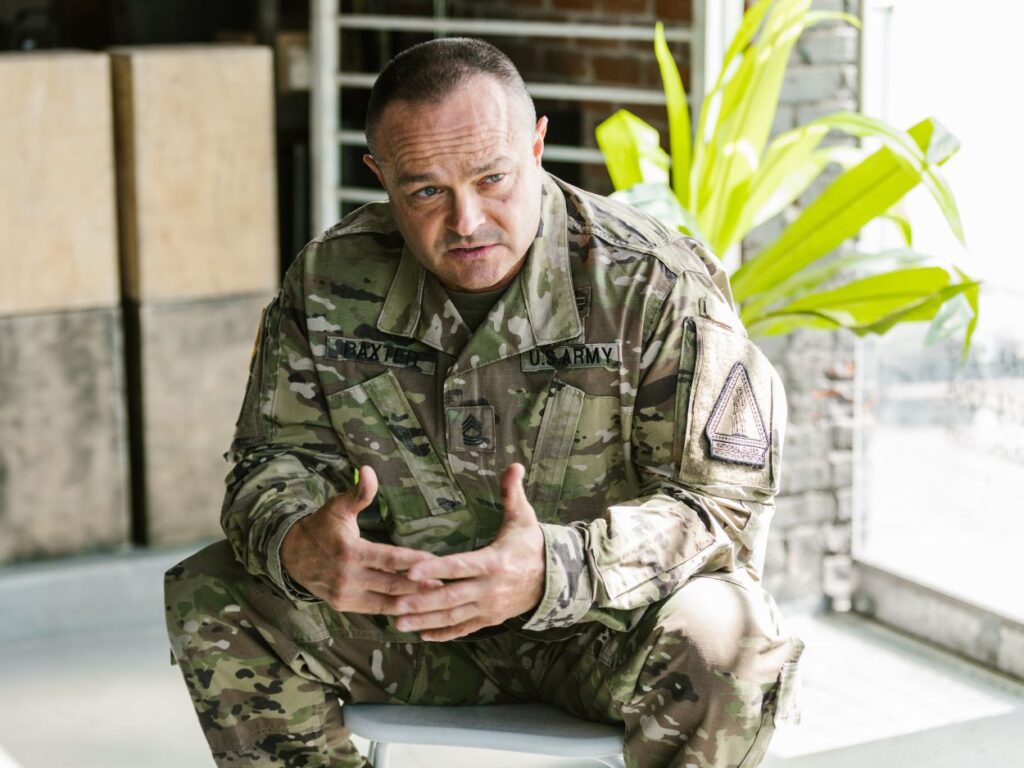
High-volume intensity was a top priority for active-duty PT. It’s about sustained intensity after 40. That old airborne ops knee injury? It serves as a signal to switch from hard leg presses to step-ups or resistance bands, so it’s more than simply a badge of glory. Recovery is essential to the task; it is not optional.
Consider mobility exercises (yoga, foam rolling) and sleep in your new “mandatory gear.” According to a VA study, injury rates were lowered by 40% for veterans who used programs like Gerofit, which combines strength and flexibility.
Functional Fitness > Max Lifts
Ignore your mirror muscles. Concentrate on exercises that help you maintain your independence, such as TRX rows to brace your shoulders, farmer’s carry to increase your grip endurance, or deadlifts that simulate lifting equipment. To save his knees and keep his stamina, a former Marine I know switched from lengthy runs to ruck walks (lower load, no timer).
Here’s how you make the most of actionable Intel:
- Impact on Intensity: Switch half of your weekly runs to cycling or swimming. Your joints will appreciate it.
- Mobility as Upkeep: Set aside one weekly session for soft-tissue exercises and dynamic stretches. A vehicle buffer ($30) can be used as a deep-tissue instrument for troublesome knots.
- Advancement Similar to a Recon Goal: Instead of doing ego lifts, add weight in 5% increments. If benching bothers you, try push-up variants or floor presses.
- Examine Your Sixth (With Experts): Medical information can be transformed into a customized program by a coach with tactical training or a physical therapist.
The aim is to build a robust body that enables you to teach Little League, climb without flinching, or take on a home project, not to replicate your 25-year-old self’s PT results. Modify your approach, pay attention to the signals your body gives you, and keep moving forward.
Debunking Myths about Aging & Lifting for Military Veterans
Let’s break through the clutter. Half-truths regarding lifting that don’t stand up to inspection are frequently given to elderly veterans.
Here’s the actual intel:
Myth 1: “If you’ve got PTSD, steer clear of the weights”
Reality: Lifting isn’t forbidden, but PTSD needs to be carefully managed. In fact, organized strength exercises can increase concentration and lessen anxiety. The secret? Consult a coach or therapist who is knowledgeable about trauma-informed programming. Kettlebell exercises are a grounding technique for one Army veteran I know—controlled movement, quantifiable development.
Myth 2: “Aging means your lifting days are over”
Reality: Your body doesn’t perish; it adapts. While recuperation slows and testosterone levels drop, a 55-year-old Marine Corps study found that proper exercise helped veterans retain 90% of their peak strength. The solution is to add a rest day and prioritize compound exercises (squats, presses) at 70–80% of your maximum. Your joints require more intelligent loading; they are not “weak.”
Myth 3: “Stick to walks and swimming—weights are too risky”
Fact: Skipping strength training hastens the loss of muscular mass. Veterans with arthritis or chronic ailments may lift safely, as demonstrated by the VA’s Gerofit program. If necessary, replace barbells with TRX systems or resistance bands. Instead of bench pressing, a Navy SEAL with shoulder injuries now performs floor presses; the results are the same, and there is no discomfort.
Myth 4: “You need supplements to keep up”
The majority of “muscle-building” supplements are actually marketing gimmicks. Pay attention to vitamin D3 consumption (a frequent shortage in veterinarians) and protein intake (0.8g per pound of body weight). A retired Ranger reversed sarcopenia I coach who consumed 30g of protein every meal—no powders, just actual food.
Myth 5: “Injuries mean you’re done lifting.”
Lifting is actually rehabilitation. Variations of the deadlift increased mobility more than passive treatment, according to a 2022 research on veterans with lower-back problems. Consult a physical therapist to modify your actions; for instance, try trap bar pulls rather than conventional deadlifts.
All you need to do is update your toolkit. Prioritize protein, seek advice from a VA-affiliated physical therapist, and substitute joint-friendly options for ego lifts. The goal is to use strategy to outmaneuver aging, not to relive your 25-year-old self’s glory.

Rules of Injury-Proof Lifting for Veterans
You shouldn’t hang up the weights just because your body isn’t the same as it was when you were on active service. It entails doing a more intelligent job.
To lift with longevity in mind, follow these steps:
Master the Basics, Then Modify
Apply the accuracy you learned in military training to lifting. Give form precedence over ego. A well-executed bent-over row with a 30-pound kettlebell is superior to a careless 50-pound pull. For veterans who have back or shoulder pain, substitute floor presses for bench presses, keeping the elbows below shoulder level.
- To lessen the strain on the spine, go from barbell squats to goblet squats.
- If you have persistent lower-back discomfort, use a trap bar when performing deadlifts.
Progress like a Recon Mission
“No pain, no gain” is a myth. Apply the 2-for-2 principle: If you can easily perform two or more repetitions over your goal for two consecutive sessions, then add weight. For instance, wait until you have completed 10 clean reps twice before increasing the load if your goal is 8 reps.
Mobilize Before You Musculate
Your new pre-op checklist should include dynamic warm-ups. Spend ten minutes:
- Preparing your hips with leg swings (front/back, side-to-side)
- Rotator cuffs are activated by pulling apart the band
- Bear crawls work the shoulders and core
- Static stretch your chest and hamstrings for 30 seconds each after working out
Recover like It’s Part of the Op
Recovery is tactical, not weak.
- Seven or more hours of sleep is essential for tissue restoration.
- Active recuperation days include swimming or ruck walks (low burden, no time constraints).
- It’s important to hydrate. Try to consume half your body weight in ounces each day (180 pounds = 90 ounces).
Track the Intel That Matters
- Don’t try to get maximum lifts. Reduced post-workout ibuprofen dosages are one way to gauge success.
- Gear lifts that are easier (like carrying groceries without experiencing lower-back pain).
- Steady amounts of energy all day long.
Leverage VA Resources
Vet-specific strength regimens are available for free through the VA’s Gerofit program. If your persistent discomfort continues, ask to be sent to a physical therapist who specializes in battle injuries; they will modify your lifts to avoid trouble spots.
The goal of injury-proofing is to channel discipline into long-lasting habits, not to avoid hard labor. Now, your goal is to outlast rather than outlift.
Veteran-Approved Lifting Plan
Your lifting program after service shouldn’t seem like a punishment for boot camp. It’s about regaining long-lasting strength without sacrificing oneself.
This is a straightforward workout plan created by and for veterans. If you want the absolute best results, I’d recommend getting help from personal trainers like the ones at my favorite gym in Cambridge, MA. If you’re more of a DIY type of person, the plan below will definitely get you stronger.
The Framework: Strength That Translates
Pay attention to functional patterns that reflect everyday activities, such as playing with grandchildren, carrying groceries, and lifting equipment. Give up leg extensions and isolated curls.
Prioritize compound lifts that increase resilience:
- Compared to typical deadlifts, trap bar deadlifts are gentler on the spine.
- Bench presses are not as safe for the shoulders as floor presses.
- Farmer’s carries (core stability with grip strength).

Sample Weekly Template
Day 1 – Lower Body
- 3×5 deadlifts with a trap bar (begin lightly, excellent form first)
- 3×8 box step-ups per side (which simulate climbing and rucking)
- 3×60 farmer’s carries seconds with sandbags or kettlebells
Day 2 – Upper Body
- 3×8 floor push press (to avoid shoulder impingement)
- 3×10 TRX rows (rotator cuff health scalable)
- 3×15 band face pulls (counters hunch from a desk job)
Day 3 – Conditioning
- 5×5 clean and carry sandbag (full-body power)
- 4×40-yard sled pushes (knee-friendly cardio)
- No tools? Make use of a full backpack or water containers
What about Rest Days? 30-minute ruck walks (20lb pack, no speed goals) or pool sessions for active recovery.
Rules of Engagement
Form Trumps Everything
Your previous PT score is irrelevant here. If your back rounds during deadlifts, rebuild after reducing weight by 20%. After undergoing knee surgery, a retired Marine sniper I work with switched from barbell to goblet squats and is still able to maintain pain-free leg strength.
Progress like a Tactical Op
Follow the 2-for-2 rule: Only increase weight if you achieve two or more clean repetitions over your goal in two consecutive sessions. For instance, wait until you reach 10 times if your goal is 8 repetitions.
Modify, Don’t Quit
- Shoulders that hurt? Use landmine presses instead of overhead presses.
- Knee problems? Step-ups onto a sturdy bench should be substituted for lunges.
- Pain in your lower back? The rangeDeadlift blocks decrease the range of motion.
Recover like it’s Your Job
- Get at least seven hours of sleep. It is non-negotiable for tissue healing (VA studies correlate insufficient sleep to two times increased damage risks).
- Hydrate by consuming half of your body weight in ounces each day (180 lbs = 90 oz).
- Use a lacrosse ball on your calves, traps, and glutes for ten minutes per day.
This strategy is similar to VA-approved initiatives like Gerofit, which decreased injuries among veterans aged 50 and older by 40%. Maintaining the strength to climb, build a deck, or carry your sea bag one final time in retirement is more important than hitting maximum lifts.
Reliving the PRs of your 25-year-old self is not your goal. The goal is to develop a durable body. Begin here. Make any necessary adjustments. Continue your march.
Nutrition for Muscle & Joint Health
Consider your body like a Humvee, which requires the proper gasoline to navigate difficult terrain. The goal of post-service nutrition is strategic restocking, not trendy diets.
Protein: Your Repair Kit
Every day, try to consume 1g of protein per pound of body weight. Greek yogurt and eggs are MRE-level efficient (20g per cup). To lessen joint inflammation, rotate in omega-3-rich canned salmon or sardines (imagine it as lubricating rusted hinges).
Anti-Inflammatory Ammo
Reduce stiffness by eating foods that reduce inflammation:
- Add half a teaspoon of turmeric to your coffee (it’s typical in Okinawa, where people seldom have joint problems).
- Berries that are frozen are inexpensive, durable, and high in anthocyanins.
- WD-40 for groaning joints is leafy greens like spinach and kale.
Hydration: Mission-Critical
Dehydration accelerates wear and tear. Consume half your body weight in ounces (180 lbs = 90 oz) every day. Track your intake using a canteen—old habits don’t go away easily.
Field Rations, Upgraded
Replace packaged snacks with low-sodium jerky, almonds, and hard-boiled eggs. Make chili in bulk using kidney beans and lean ground turkey; it reheats more quickly than an MRE and stores nicely.
The days of food halls are past. Eat as if you were preparing for an extended patrol: wholesome, long-lasting foods that keep you going.
Mental Toughness: From Service to Strength
Your secret weapon for post-service lifting is the same discipline that helped you pass PT exams and deployments. Motivation is ephemeral, so forget it. The structure is your advantage.
Treat Workouts like Missions
Lifts should be planned like an operation: exfil (cool-down), intel (correct form), and defined goals (sets/reps). I know a former Master Sergeant who keeps track of improvements in a “fitness CONOP,” which is similar to a debrief.
Embrace the Garrison Mindset
Your new duty station is the gym in your garage, as you would for formation; arrive at 0600. Intensity is subordinated to consistency; three weekly 30-minute sessions are superior to a single burnout marathon.
Leverage the Brotherhood
More gains are ruined by loneliness than by bad form. For accountability, team up with another veteran; observe one another as you would a hostile adversary.
Adapt, Don’t Quit
Shots from rucking in the knees? For rowing, switch runs. Is the rotator cuff malfunctioning? Shoulders are saved by trap bars. Your methods should change as the objective does.
VA initiatives like Gerofit demonstrate that resilience is a strategy rather than a state of suffering. Your toughness is only waiting for new orders; they haven’t expired.
Conclusion
Strength now equates to sustainability when your objective changes. Replace ego boosts with joint-smart tactics, prioritize recuperation, and build resilience. This is a precise advance, not a retreat. Stay battle-ready, adapt, and outlast.
The goal? A body that survives. Keep going; your next opportunity is coming up.
Disclaimer: “Be sure to speak with your healthcare provider before beginning, particularly if you have injuries related to your service.”